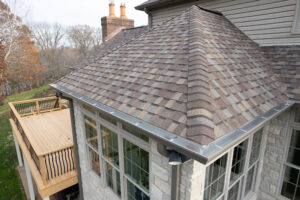
Roof Flashing
The Small Roofing Detail Behind Many Preventable Leaks
Roof flashing is material installed at roof edges, intersections, walls and penetrations to direct water away from vulnerable areas. Flashing is commonly found around chimneys, walls, valleys, plumbing vents and other roof transitions. Damaged, loose or improperly installed flashing can allow water into a home even when the surrounding shingles are still in serviceable condition.
Your Shingles May Not Be the Reason Your Roof Is Leaking
A homeowner notices a brown spot forming on the ceiling.
The first thought is usually:
“My shingles are leaking.”
Sometimes they are.
But after spending years inspecting roofs, one lesson becomes obvious: finding water inside a house doesn’t automatically mean the main roofing material has failed.
Some of the first places we investigate are the transitions.
Where does the roof meet a wall?
Is there a chimney nearby?
Is there a plumbing vent above the leak?
Is the problem near a valley?
Is there a skylight?
Those areas often rely heavily on roof flashing.
The Insurance Institute for Business & Home Safety (IBHS) describes the primary function of flashing as shedding or directing water away from roof edges and penetrations so that water doesn’t infiltrate the building.
Flashing isn’t usually the part of a roof homeowners notice.
But it’s one of the details roofing contractors need to get right.
What Exactly Is Roof Flashing?
A roof isn’t one uninterrupted surface.
Think about everything that can interrupt the roof plane:
Chimneys
Plumbing vents
Skylights
Dormers
Walls
Valleys
Roof edges
HVAC or mechanical penetrations
Changes in roof direction
Every one of those areas creates a transition where water has to be controlled.
Flashing is incorporated into these areas to help direct water onto the roof covering and toward the drainage system rather than allowing it to enter behind the roofing materials.
Different situations require different flashing configurations.
That’s important because there isn’t one universal piece of metal called “roof flashing” that solves every problem.
The detail around a chimney is different from the detail around a plumbing vent.
A roof-to-wall transition is different from a valley.
And flashing on an asphalt shingle roof may differ from details used on metal or other roofing systems.
Common Types of Roof Flashing Homeowners Should Know
You don’t need to become a roofer to understand the basic areas worth watching.
Step Flashing
Step flashing is commonly associated with areas where a sloped roof meets a vertical wall.
Instead of depending on one long piece of metal, the flashing is integrated with the roofing so water is repeatedly directed back onto the roof surface as it travels downhill.
Problems can occur when these transitions are installed incorrectly, modified later or disturbed during siding or roofing work.
Chimney Flashing
Chimneys can create several water-management challenges because the roof has to transition around a large vertical penetration.
Depending on the design, the flashing system may involve base flashing, step flashing, counterflashing and other details.
IBHS explains that counterflashing is used at roof-to-wall transitions and around penetrations such as chimneys and vent stacks, where it works with underlying flashing to help prevent water infiltration.
If you’ve ever had a mysterious ceiling stain near a fireplace or chimney, the flashing is one of the areas that deserves investigation.
That doesn’t mean the flashing is automatically responsible. Chimneys themselves can have masonry, cap or other moisture issues.
The point is to diagnose before repairing.
Valley Flashing
A roof valley is formed where two sloping roof planes come together and direct runoff toward the same area.
That makes water management particularly important.
IBHS notes that valley flashing is designed to prevent infiltration where two sloping roof planes intersect.
Valleys also tend to collect leaves and debris, which is another reason these areas deserve attention during roof inspections.
Drip Edge
Drip edge is flashing installed around portions of the roof perimeter.
IBHS describes drip edge as a component intended to divert water away from the roof and walls.
It’s a small component, but roof edges are important transition points between the roofing system, fascia and gutters.
Pipe and Vent Flashing
Plumbing vents and other pipes create holes through the roofing system.
Those penetrations have to remain watertight while being exposed to sun, rain, temperature changes, snow, ice and wind.
Depending on the roof system, different boots and flashing assemblies may be used.
When we’re investigating a leak near a bathroom, kitchen or other plumbing area, roof penetrations are among the places worth checking.
Skylight Flashing
A skylight is essentially a large opening intentionally installed through the roofing system.
That doesn’t make skylights inherently problematic.
It does mean installation details matter.
IBHS inspection guidance specifically includes skylights and the transition flashing around roof-mounted equipment and penetrations as components that should be evaluated when inspecting roof systems.
Why Does Roof Flashing Start Leaking?
There isn’t one answer.
Installation Problems
A flashing system needs to be integrated with the roofing and surrounding materials correctly.
Simply applying sealant over a poorly designed transition isn’t the same thing as properly flashing it.
Sealants have appropriate roofing applications, but they shouldn’t automatically be treated as a substitute for correct water-management details.
Age and Weather Exposure
Roof components live in a difficult environment.
During a Missouri year, the same roof can experience intense summer heat, freezing winter temperatures, thunderstorms, wind, hail, snow and ice.
Metal also responds to temperature changes.
IBHS notes that thermal expansion and contraction can cause metal flashing to move and, when it isn’t properly accommodated, potentially loosen fasteners or create opportunities for water infiltration.
Previous Repairs
This is one we encounter fairly often.
Someone had a leak years ago and applied roofing cement or sealant over the area.
Then another layer was added later.
Eventually you’re looking at a large patch without knowing whether the original flashing problem was ever corrected.
Temporary repairs can be useful in the right circumstances.
But repeatedly covering a problem doesn’t necessarily fix the detail underneath.
Work Performed by Other Trades
Roof penetrations aren’t always created by roofers.
Satellite equipment, plumbing, HVAC work, solar installations and other projects may involve someone working on or through the roofing system.
IBHS advises homeowners to consider the roof when allowing other contractors access and to consult a roofing professional so one repair doesn’t lead to additional roof repairs.
If new equipment has recently been installed and a leak develops afterward, tell your roofing contractor.
That information can make diagnosis much easier.
Storm Damage
Wind can loosen components, move roofing materials or damage flashing.
Debris can also strike penetrations and transitions.
After a significant storm, the obvious missing shingles get most of the attention.
But the less obvious details matter too.
Signs You May Have a Flashing Problem
Flashing problems don’t always advertise themselves from the ground.
Possible warning signs include:
Ceiling stains near chimneys or exterior walls
Water appearing around a skylight
Moisture near plumbing vent locations
Loose or visibly displaced metal
Rust or deterioration on exposed flashing
Sealant pulling away from a flashing detail
Water staining below a roof-to-wall intersection
Repeated leaks in the same location
Leaks that occur primarily during wind-driven rain
Moisture around valleys or roof transitions
One important caution:
The location where you see water inside isn’t necessarily where the water entered the roof.
Water can travel along decking, framing or other building materials before becoming visible.
That’s why chasing the ceiling stain from directly above isn’t always enough.
Why Missouri Weather Makes Roof Transitions Worth Watching
Greater St. Louis and east-central Missouri homes don’t experience one type of weather all year.
Our roofing systems move through seasonal extremes.
Summer heat is followed by colder weather.
Thunderstorms can bring wind-driven rain.
Leaves and debris can accumulate in roof valleys during fall.
Winter brings freezing temperatures, snow and ice.
Then spring storm season starts the cycle again.
The roof’s transitions have to manage water through all of it.
This is one reason periodic roof inspections can be useful.
The National Roofing Contractors Association notes that inspections can uncover conditions such as missing or damaged shingles, loose seams and deteriorated flashing before homeowners necessarily discover them through a major leak.
For homeowners throughout Washington, Union, Pacific, Villa Ridge, Franklin County, St. Charles County, Jefferson County, St. Louis County and surrounding communities, inspecting the entire roof system—not simply looking for missing shingles—can provide a much better picture of its condition.
Does a Flashing Leak Mean You Need a New Roof?
Absolutely not in every situation.
This is where diagnosis matters.
NRCA specifically notes that a leaking roof doesn’t necessarily require complete replacement; leaks can result from loose flashing or localized roof damage.
There are several possible outcomes.
A Localized Repair May Be Enough
If the roofing system is otherwise in good condition and the issue is isolated to one repairable flashing detail, a targeted repair may be the appropriate solution.
That’s one reason homeowners shouldn’t automatically assume a ceiling stain equals a five-figure roofing project.
Maintenance May Be Appropriate
Sometimes an inspection uncovers a condition that hasn’t created significant damage yet.
Correcting a loose component or maintaining an appropriate detail early can potentially prevent a larger repair later.
Monitoring May Make Sense
Not every cosmetic condition requires immediate construction.
If the system is watertight and the contractor doesn’t find active deterioration, documenting the area and monitoring it may sometimes be reasonable.
Replacement Can Still Be the Better Decision
There are also situations where replacing the entire roof makes more sense.
If the roofing system is extensively deteriorated, has numerous active problems or is already being replaced for unrelated reasons, rebuilding flashing details as part of the new roofing system may be preferable to repeatedly repairing individual areas.
The decision should come after the inspection, not before it.
Flashing Should Be Evaluated During Roof Replacement
A new roof isn’t just new shingles.
A proper roofing project requires attention to the entire water-management system.
That includes transitions and penetrations.
IBHS roof-inspection guidance identifies perimeter flashing, step flashing, valley flashing and transition flashing around equipment, skylights, chimneys and other penetrations as components of the overall roof assembly that should be evaluated.
When Washington Roofing & Construction replaces a roof, details like these matter because beautiful shingles don’t compensate for poorly handled transitions.
Homeowners comparing roofing proposals should ask contractors what happens to existing flashing.
Will it be evaluated?
What flashing will be replaced?
How will chimney and wall transitions be handled?
What happens around plumbing vents?
How are valleys addressed?
Those questions can tell you a lot about how thoroughly a contractor approaches roofing.
When Should You Call a Roofing or Exterior Professional?
Consider scheduling an inspection when you notice an active leak, new ceiling stain, moisture near a chimney or skylight, visible flashing movement, storm damage or recurring leakage in an area that has already been repaired.
You should also have questionable flashing evaluated before another contractor installs equipment through or onto your roof.
And stay safe.
NRCA recommends homeowners generally avoid climbing onto roofs themselves because improper techniques can damage roofing and falls can cause serious injury.
A professional inspection can evaluate both the obvious roofing materials and the less noticeable transitions where water intrusion may begin.
Frequently Asked Questions About Roof Flashing
Can roof flashing be repaired without replacing the roof?
Often, yes. If the problem is localized and the surrounding roofing remains serviceable, flashing repairs may be possible without replacing the complete roof. The specific repair depends on the flashing type and surrounding materials.
Why does my chimney leak only during heavy rain?
Wind direction, rainfall intensity and the path water takes around a chimney can expose problems that aren’t noticeable during lighter rain. Chimney flashing is one possibility, but masonry, caps and other chimney components should also be evaluated.
Can you just put roof sealant over leaking flashing?
Sealants have legitimate roofing uses, but simply coating a problem doesn’t guarantee the underlying flashing detail has been corrected. The cause of the leak should be identified first.
Is flashing replaced when getting a new roof?
The answer depends on the flashing type, condition, roofing system and project specifications. Homeowners should ask exactly how existing roof penetrations and flashing details will be handled before approving a roofing proposal.
Can flashing fail even if my shingles look good?
Yes. Flashing and shingles perform different jobs. NRCA notes that roof leaks can result from loose flashing or localized damage even when complete roof replacement isn’t necessary.
Should roof flashing be inspected after a storm?
If your property experienced significant wind, hail or flying debris—or you notice a new leak afterward—having the roof system inspected can help identify damage to shingles, flashing, penetrations and other components.
A Roof Is Only as Good as Its Details
Homeowners naturally focus on shingles because they’re the most visible part of the roof.
Roofing contractors have to look deeper.
Chimneys, valleys, walls, skylights, vents and other transitions are places where proper installation details become extremely important.
At Washington Roofing & Construction, we don’t believe every leak means you need a new roof.
Sometimes you need replacement.
Sometimes you need a repair.
And sometimes one relatively small detail is creating the entire problem.
The important part is determining which situation you’re actually dealing with.
If you’ve noticed a ceiling stain, recurring leak, storm damage or concerns around a chimney, skylight or roof penetration, Washington Roofing & Construction can evaluate the roofing system and help determine the appropriate next step.
Schedule your free roof and exterior inspection with WR&C and find the source of the problem before deciding on the solution.
Verified Authoritative Sources
National Roofing Contractors Association — Roofing Resources — NRCA homeowner guidance covers roof inspections, signs of deterioration and why a roof leak doesn’t automatically require complete replacement.
Insurance Institute for Business & Home Safety — Metal Flashing Guide — Detailed technical guidance explaining flashing’s role at roof edges, chimneys, walls, valleys and penetrations.
IBHS — Roof Survey Practices — Inspection guidance identifying perimeter, step, valley and transition flashing as important roof-system components.
IBHS — Natural Weathering and Hazard Exposure — Homeowner guidance on roof maintenance, inspection of flashing details and protecting roofing when other trades need roof access.

Roof Granules in Your Gutters: Normal Shingle Aging or a Sign of Roof Damage?

Commercial Roof Ponding Water: When Standing Water Is a Warning Sign

Should You Replace Your Skylights When You Replace Your Roof?

Wind Damage to Your Roof: 9 Signs Missouri Homeowners Should Look for After a Storm

Roof Flashing: The Small Roofing Detail Behind Many Preventable Leaks