
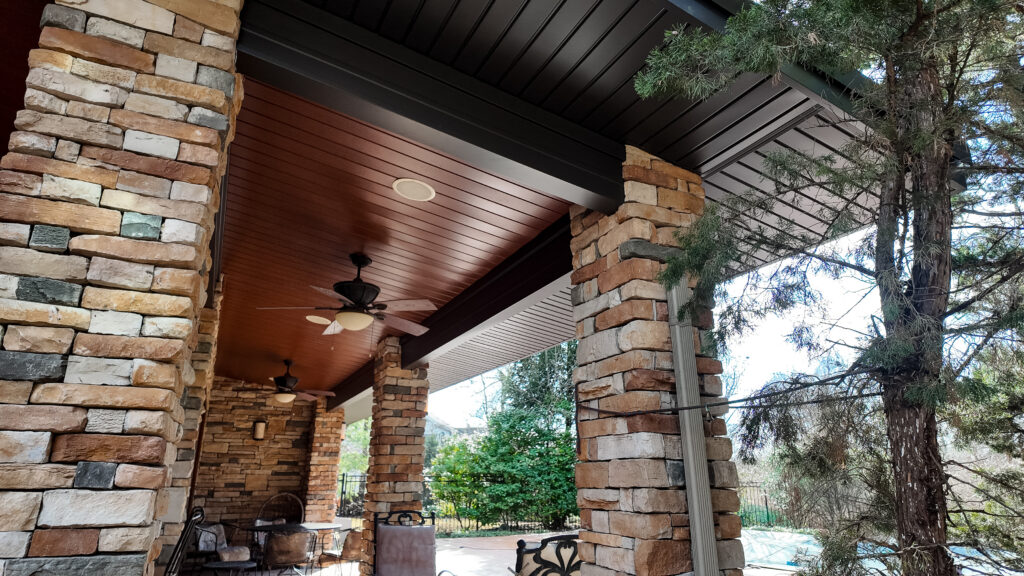
Why Attic Ventilation Matters: How Your Soffit and Roof Work Together
Proper attic ventilation creates a path for outside air to enter near the lower portion of the roof—commonly through soffit vents—and exit higher on the roof through exhaust ventilation. Combined with proper insulation and air sealing, this airflow can help control attic heat and moisture, reduce condensation problems and support a more durable roofing system.
Your Roof Needs to Breathe: Understanding Attic, Soffit and Roof Ventilation
When homeowners think about their roofing system, they usually picture the shingles.
But some of the most important parts of a properly functioning roof aren’t easily visible from the ground.
Your attic, insulation, soffit and roof ventilation all work together as part of a larger system.
After decades of working around roofing and exterior systems, one thing becomes very clear: problems that appear to be roofing problems don’t always start with the shingles.
Sometimes the problem begins underneath them.
Moisture in the attic, blocked soffit vents, improper exhaust ventilation, inadequate air sealing and insulation problems can all contribute to conditions that eventually show themselves at the roofline.
Understanding how attic ventilation works can help homeowners recognize problems earlier and make better decisions about repairs and maintenance.
How Does Attic Ventilation Work?
Most traditional vented attic systems depend on two basic components:
Intake ventilation allows outside air into the attic.
Exhaust ventilation allows attic air to leave.
On many homes, intake ventilation is located in the soffit—the material underneath the roof overhang.
Exhaust ventilation is located higher on the roof and may include ridge vents or other properly designed roof exhaust vents.
The idea is relatively simple.
Air enters lower in the attic and has a pathway toward exhaust ventilation higher on the roof.
ENERGY STAR specifically notes that rafter vents, sometimes called insulation baffles, can maintain a channel for outside air to move from soffit vents toward gable or ridge ventilation.
However, simply having vents installed doesn’t automatically mean the attic is functioning correctly.
The entire system has to work together.
Why Your Soffit Is More Important Than You May Think
Soffit often gets treated like a cosmetic part of a home’s exterior.
It certainly contributes to the finished appearance of the house, but vented soffit can also serve an important functional purpose by providing intake ventilation.
Here’s a common problem we see:
A home has roof ventilation installed, but insulation has been pushed tightly against the eaves and is covering the soffit vents.
The vents technically exist, but the airflow pathway has been restricted.
ENERGY STAR specifically warns homeowners not to cover attic soffit vents with insulation and recommends using rafter vents where appropriate to maintain airflow.
This is why replacing a roof without paying attention to the attic, soffit and ventilation system can miss an important part of the overall picture.
What Happens When Attic Ventilation Isn’t Working Properly?
Poor attic conditions can show themselves in several different ways.
Some are obvious.
Others can remain hidden for a surprisingly long time.
1. Moisture Can Accumulate
Moisture can enter an attic from multiple sources.
A roof leak is one possibility, but moisture can also come from inside the home.
Warm, moisture-containing indoor air can migrate into attic spaces through gaps and penetrations. Bathroom, kitchen or dryer exhaust improperly terminating in an attic can create additional moisture problems.
The U.S. Department of Energy identifies moisture as a major threat to attic durability and notes that moisture intrusion can damage roof components and insulation.
This is an important distinction for homeowners.
Moisture in the attic does not automatically mean your roof is leaking.
A proper inspection should determine where that moisture is actually coming from before someone recommends replacing your roof.
2. Condensation Can Develop
During cold weather, warm moist air meeting colder surfaces can create condensation.
A homeowner may discover wet roof decking or damp insulation and immediately assume rain or melting snow is entering through the shingles.
Sometimes that’s exactly what’s happening.
But sometimes it isn’t.
Condensation can create moisture symptoms that resemble a roof leak.
That’s why diagnosing the source matters.
3. Mold or Wood Deterioration Can Occur
Persistent moisture can eventually contribute to mold growth and deterioration of wood components.
ENERGY STAR recommends professional evaluation when homeowners encounter wet insulation, moldy or rotted rafters or joists, little or no attic ventilation, or exhaust vents terminating directly into the attic.
These aren’t conditions homeowners should simply cover up with additional insulation.
The moisture source needs to be identified and corrected.
4. Summer Attic Temperatures Can Become Excessive
Anyone who has climbed into a Missouri attic during July knows how hot an attic can become.
Ventilation is one part of managing those conditions.
ENERGY STAR explains that natural airflow through a properly ventilated attic helps move superheated air out during summer while insulation helps resist heat transfer into the living space.
Ventilation isn’t a substitute for insulation or air sealing.
All three need to be considered as parts of the building system.
Attic Ventilation and Missouri Weather
Homes throughout Washington, Franklin County, St. Charles County, Jefferson County, St. Louis County and the surrounding Greater St. Louis region experience a wide range of weather.
We deal with hot, humid summers.
We also experience freezing temperatures, snow and ice during winter.
That seasonal variation makes attic conditions especially worth paying attention to.
During Summer
Sunlight heats the roof throughout the day.
Heat builds inside the attic while air conditioning is working below.
Ventilation helps provide a pathway for heated attic air to escape, while properly installed insulation helps slow heat transfer into the conditioned portion of the house.
During Winter
The situation changes.
Now the goal isn’t simply getting hot air out of the attic.
You also want to limit warm, moisture-containing indoor air from entering the attic while maintaining appropriate ventilation.
ENERGY STAR notes that keeping the attic colder during winter can reduce the potential for ice dam formation. Proper insulation and air sealing are also important because they help prevent heat and moisture from escaping from the living space into the attic.
That illustrates an important point:
Ventilation alone isn’t the solution to every attic problem.
Sometimes the problem is insulation.
Sometimes it’s air leakage.
Sometimes it’s blocked ventilation.
Sometimes it’s an actual roof leak.
And occasionally, it’s a combination of several problems.
Common Signs Your Attic Ventilation Should Be Inspected
You don’t necessarily need to climb into your attic to recognize potential problems.
Watch for symptoms such as:
Recurring condensation or moisture in the attic
Damp or compressed insulation
Mold-like growth on roof decking or framing
Rusting roofing nails visible from inside the attic
Peeling or deteriorating exterior soffit or fascia
Ice dams during winter
Uneven indoor temperatures
Noticeably hot upstairs rooms
Bathroom or exhaust vents terminating inside the attic
Insulation covering soffit ventilation
Visible staining on attic decking
None of these symptoms individually proves that ventilation is the cause.
They are clues.
A good inspection should determine why the condition is happening rather than simply treating the symptom.
Don’t Assume More Vents Are Always Better
One of the biggest misconceptions about roof ventilation is that adding more vents automatically improves the system.
That’s not necessarily true.
Ventilation needs to be designed as a system.
Intake and exhaust have to work together, and the appropriate design depends on the roof and attic configuration.
Mixing different exhaust strategies without understanding how air will move through the attic can create unintended airflow patterns.
This is why ventilation should be evaluated when replacing a roof rather than automatically duplicating whatever ventilation happened to be installed previously.
The existing system may have been designed correctly.
Or it may have been wrong for years.
Soffit Replacement Is a Good Time to Check Ventilation
If you’re replacing damaged or aging soffit and fascia, it’s an excellent opportunity to look at attic intake ventilation.
Contractors should be looking beyond appearance.
Questions worth asking include:
Is the existing soffit vented?
Are the ventilation openings clear?
Is insulation blocking the intake?
Are baffles needed to maintain an airflow pathway?
Are there signs of moisture or deterioration behind the soffit?
Your soffit, fascia, gutters and roof aren’t completely independent systems.
Problems in one area can affect another.
Roof Replacement Is Also an Opportunity to Evaluate the Attic
When replacing a roof, the contractor has an opportunity to evaluate more than just the shingles.
Before recommending a ventilation change, it can be helpful to inspect:
Existing intake ventilation
Existing exhaust ventilation
Roof decking condition
Attic moisture
Insulation placement
Airflow pathways near the eaves
Existing roof penetrations
Bathroom or mechanical exhaust locations
If the existing ventilation system is working properly, there may be no reason to completely redesign it.
If there are obvious deficiencies, however, roof replacement can provide an opportunity to correct them.
Repair, Improve or Replace?
Finding an attic ventilation problem doesn’t automatically mean you need a new roof.
That’s important.
Depending on the cause and condition of the roofing system, the appropriate solution might involve something relatively minor.
Maintenance May Be Enough
If insulation has shifted and blocked otherwise functional soffit vents, correcting the obstruction and restoring the intended airflow pathway may address part of the problem.
Ventilation Improvements May Be Needed
Some homes may benefit from changes to intake or exhaust ventilation.
That decision should be based on the specific roof and attic rather than a one-size-fits-all approach.
Air Sealing or Insulation May Be the Real Issue
If heated or conditioned air is leaking into the attic, improving air sealing or insulation may be more important than adding roof vents.
ENERGY STAR specifically recommends addressing attic air sealing before adding insulation in many situations.
Roof Repair May Be Necessary
If moisture is coming through damaged flashing, shingles or another roof penetration, the problem may require a targeted roof repair.
Roof Replacement May Be Appropriate
If the roof is already near the end of its service life or has widespread deterioration, replacement may make more sense than performing repeated repairs.
The important thing is identifying the actual cause before deciding on the solution.
When Should You Call a Roofing or Exterior Professional?
Consider scheduling an inspection if you notice recurring attic moisture, stained roof decking, damaged soffit or fascia, persistent ice dams, suspected roof leaks, mold-like growth, blocked ventilation or unexplained moisture around the roofline.
You should also consider having the attic and ventilation system evaluated when planning a roof replacement.
A qualified contractor can look at the roof from both sides—from the exterior and from inside the attic.
That often provides much more information than simply looking at shingles from the ground.
Frequently Asked Questions
Does every house need a ridge vent?
No. Roof ventilation design depends on the structure of the roof and attic. Ridge ventilation is common, but it isn’t automatically the correct exhaust solution for every home.
Can clogged soffit vents cause attic problems?
They can contribute to ventilation problems by restricting intake airflow. ENERGY STAR recommends keeping soffit ventilation clear and using rafter vents where needed to maintain an airflow pathway.
Does attic condensation mean my roof is leaking?
Not necessarily. Water entering through the roof is one possibility, but condensation and indoor moisture can also create wet attic conditions. The source should be diagnosed before deciding on repairs.
Will adding more roof vents fix a hot attic?
Not automatically. Ventilation, insulation and air sealing should be considered together. Adding vents without understanding the existing system isn’t necessarily the correct solution.
Can insulation block roof ventilation?
Yes. Insulation placed over soffit vents can restrict intake airflow. ENERGY STAR specifically cautions against covering attic soffit vents with insulation.
Should attic ventilation be inspected when replacing a roof?
It’s a good opportunity to evaluate it. The contractor can inspect the roof decking, intake and exhaust ventilation, attic conditions and existing ventilation configuration before installing the new roofing system.
Protect the Entire Roofing System
A roof is more than shingles.
The decking, flashing, attic, insulation, ventilation, soffit, fascia and gutters all interact with one another.
At Washington Roofing & Construction, we believe the first step should be figuring out what’s actually happening.
Not every moisture issue requires a new roof.
Not every ventilation concern requires installing more vents.
And not every aging component needs immediate replacement.
If you’re seeing signs of roof, soffit, fascia or attic problems around Washington, Greater St. Louis or the surrounding Missouri communities, Washington Roofing & Construction can inspect the exterior and help determine the appropriate next step.
Contact WR&C to schedule a free exterior inspection.
Authoritative Sources
ENERGY STAR — About Attic Ventilation: Explains the relationship between soffit intake ventilation, attic airflow, insulation, summer heat and winter ice-dam conditions.
ENERGY STAR Attic Ventilation Guide
ENERGY STAR — Installing Rafter Vents: Provides guidance on maintaining airflow between soffit vents and upper attic exhaust ventilation.
ENERGY STAR Rafter Vent Guide
ENERGY STAR — Attic Air Sealing: Covers warning signs including damp insulation, mold or rot, inadequate ventilation and exhaust fans terminating in attics.
ENERGY STAR Attic Air Sealing Guide
U.S. Department of Energy — Guide to Durable Attics: Discusses attic moisture, ventilation and the importance of maintaining dry attic assemblies.
U.S. Department of Energy Guide to Durable Attics